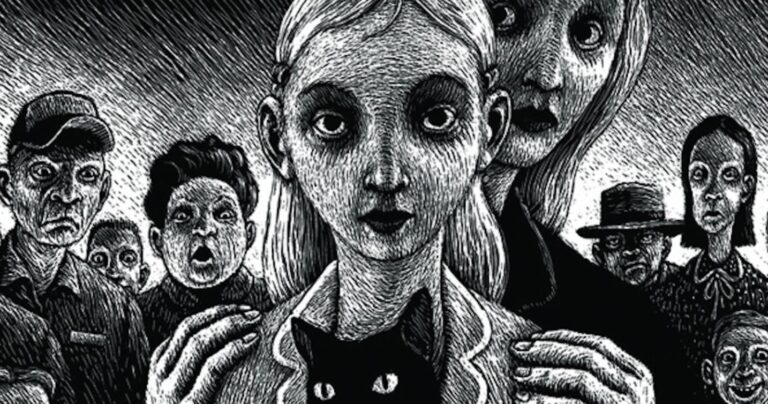
Four Levels of Metaphors by Sylvia Plath
I decided to do some four levels on the chapters from English II, Second Semester, BBA, TU, as I received several […]
Four Levels of Metaphors by Sylvia Plath Read Post »
I decided to do some four levels on the chapters from English II, Second Semester, BBA, TU, as I received several […]
Four Levels of Metaphors by Sylvia Plath Read Post »
Rabindranath Tagore is a gem of Indian literature, known all over the world for his amazing works in the domains of prose, poetry, and dramas. If you have read his writings, you must have inevitably experienced an out-of-this-world triangle of philosophy, humanism, and mysticism. No wonder, he won the Nobel Prize for literature in 1913.
Four Levels of Chandalika by Rabindranath Tagore Read Post »
f you have taken an English course at the university, you must have inevitably come across the name Alden Nowlan. Does that ring a bell? My best guess is that your professor asked you to submit an assignment on “The Loneliness of the Long Distance Runner” by Alden Nowlan.
Four levels of ‘The Loneliness of the Long Distance Runner’ by Alden Nowlan Read Post »
A school is a place where a hundred people read the same book. That’s downright stupidity. Those one hundred people can read one hundred books. Do the math. So wake up. Kick ass. Repeat. Life’s like that.
Wake Up. Kick Ass. Repeat. Read Post »
I just finished reading one of the masterpieces by Gabriel Garcia Marquez, and as you have guessed correctly, it is none other than “One Hundred Years of Solitude”. So this article is an honest and naïve attempt to summarize this novel. To be honest, I couldn’t stop myself from writing about it. So here we go.
Analysis of “One Hundred Years of Solitude” by Gabriel Garcia Marquez Read Post »
The following analysis of the Hitchhiker was the part of the assignment I submitted to my English professor back in my college days and I got a good rating for it. And so should you! Let’s take a look at this masterpiece by Roald Dahl.
Analysis of The Hitchhiker by Roald Dahl Read Post »
The idea of the poem is simple. Time is the most powerful phenomenon in the world and we human beings have no choice. Death is inevitable and it is the ultimate truth of life. The following four-level analysis of “Eight O’clock” will help you to better understand this masterpiece written by A.E. Housman.
Analysis of “Eight O’Clock” by A.E. Housman Read Post »
As the Organization operates in a dynamic environment, change is inevitable. Change in technology, knowledge, and globalization brings in new concepts in order to address emerging issues in organization design. Research and repeated experiences in the 21st century have time and again proved that it is difficult to get things done with the traditional concept of organizational design. The advancement of information and communication technology and workforce diversity has forced management to innovate in terms of their structure and business process.
Emerging Issues in Organization Design Read Post »
Macro-Meso-Micro refers to the level of policy and institutions that govern and influence development activities in all sectors. Development and growth are typically associated with macro-level economics and “top-down” approaches, but this has more recently been superseded (outmoded) by poverty reduction approaches from the “bottom-up”, with an emphasis on community empowerment and capacity building at the grass-roots.
Development Management: Macro, Meso, and Micro Planning Read Post »